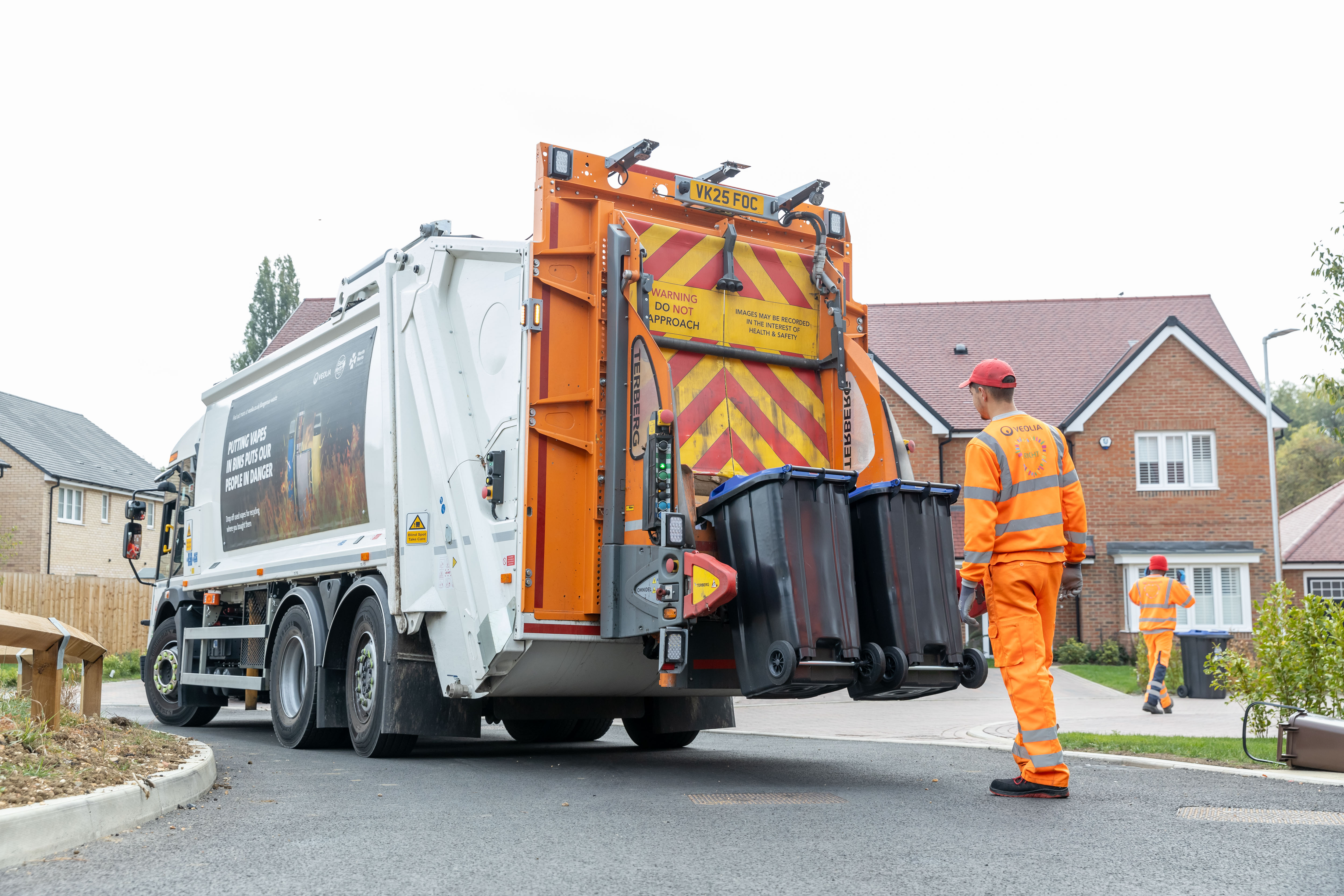
In East Herts, the introduction of the new weekly food waste collection service has played a major role in driving this success. Since August 2025, East Herts communities have separated out an incredible 2,717 tonnes of food waste, preventing it from going into general waste and instead sending it for processing into biogas and fertiliser to support greener farming and renewable energy production.
The new service, introduced in partnership with Veolia at the start of August 2025, brought in weekly food waste collections, three-weekly collections of non-recyclable waste, and more recycling options. Early data shows that residents are making full use of these services, helping to reduce environmental impact while managing waste more sustainably.
While some households initially had concerns about changes to bin numbers and collection frequency, take-up of weekly recycling and food waste collections has been strong, showing that residents are adapting quickly and positively to the new system.
The introduction of larger wheelie bins for paper and cardboard has also been welcomed, giving households more capacity to recycle increasing amounts of cardboard packaging as manufacturers continue to reduce single-use plastics.
Following a successful trial in North Herts as part of the national ‘FlexCollect’ pilot, kerbside recycling for plastic bags and wrappings has now been permanently extended across both districts, allowing residents to recycle materials that previously had to go into the general waste bin.
As well as recycling more and collecting more food waste, new collection rounds are helping to cut carbon emissions from waste lorries, supporting both councils’ wider environmental commitments.
These achievements place both districts in a strong position ahead of the national requirement for separate food waste collections coming into force on 31 March 2026, and well ahead of the March 2027 requirement for kerbside collection of plastic film. More importantly, they demonstrate the impact residents can have when working together to create cleaner, greener communities.
Councillor Tim Hoskin, Executive Member for Environmental Sustainability at East Herts Council, said: “It is fantastic to see just how much East Herts residents have embraced the service change, and in particular separating their food waste out from their non-recyclable waste. Food waste that ends up in landfill generates significant amounts of methane, a greenhouse gas which is so detrimental to the environment. It really is crucial that our food waste is all processed properly to create positive outputs like fertiliser and biogas, so every resident who uses their food waste bin truly is making an impact.”
Councillor Amy Allen, Executive Member for Environment at North Herts Council, said: “We know that changes to everyday services can feel unsettling at first, and residents were right to ask questions. But I want to thank people for giving the new system a chance and sticking with it.
"The results speak for themselves – thousands of tonnes of waste are already being diverted from landfill and incineration, with even greater environmental benefits to come. This is a shared achievement. It’s residents who are making this work, and together we’re showing that North Hertfordshire is serious about reducing waste and protecting our environment."
Nikki Mills, Senior Contract Manager at Veolia, said: "Our crews report that residents have really embraced the new service, and we are delighted to have assisted East and North Herts Councils in overhauling the collection process. These changes have improved existing route efficiency and created fuel savings. When combined with introducing renewable diesel and electric vehicles to our fleet, these efforts are also successfully lowering carbon emissions."